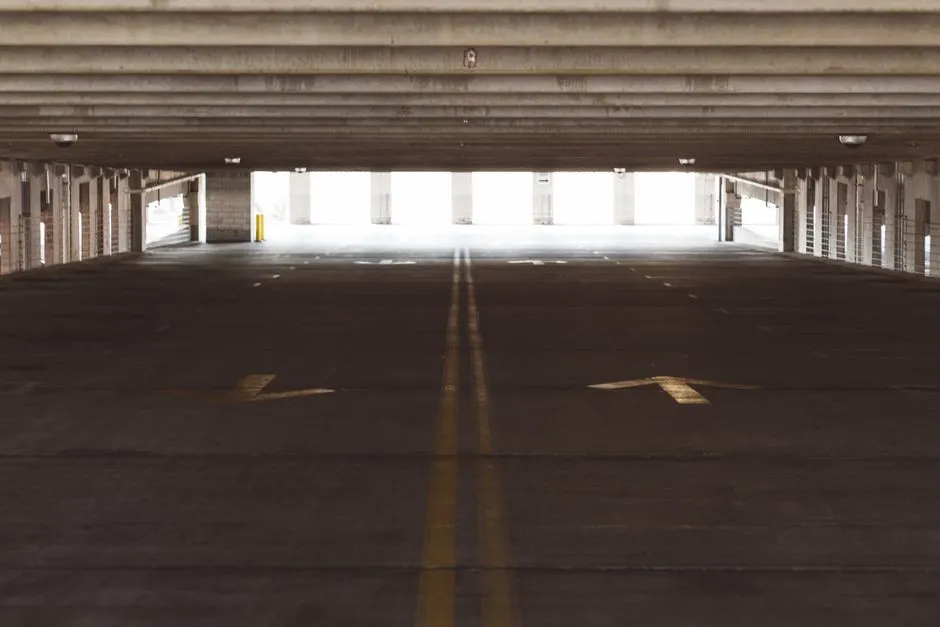
Sealing a concrete garage floor to prevent cracks means cleaning the slab, repairing any existing cracks, letting it dry completely, and rolling on two thin coats of a breathable siloxane or acrylic sealer within 24 hours of each other. That film keeps rainwater, hose spray, and coastal humidity from soaking into the slab, which is what drives the freeze-thaw and salt cycles that crack garage floors in Clairemont.
Below we walk through why Clairemont slabs crack in the first place, how to prep and seal yours step by step, what a good sealer costs in 2026, and the mistakes that cause new cracks a year after a DIY job.
Why garage floors crack in Clairemont
Garage floors in Clairemont crack because the slab absorbs water from below and above, then expands and contracts faster than the concrete can handle. Clairemont sits on clay-heavy soils and older mesa terrain, and most of the housing stock here went up between the 1950s and 1970s. Those slabs were poured thin, often 3.5 to 4 inches, with minimal control joints and no vapor barrier under them.
Add the local climate and you get a slab that moves. Morning marine layer, afternoon sun, and a 30 to 40 degree swing between winter nights and summer afternoons push moisture in and out of the concrete all year. When that water freezes in a cold snap, it expands about 9 percent, and the pressure has to go somewhere. Hairline cracks widen into quarter-inch cracks, and the corners of the slab start to spall.
We see the same pattern on driveways. If your approach apron is cracking too, the fix is the same idea - stop water at the surface before it reaches the subgrade. Our team handles driveway crack repair Clairemont with the same prep and seal process we use inside the garage.
Two more local factors matter:
- Salt air. Clairemont is 3 to 5 miles from the ocean. Airborne chloride attacks the surface paste of the concrete and opens it up to water.
- Parking on the slab. A hot tire on an unsealed slab pulls up the top layer of paste, and that paste is what protects the concrete underneath.
What sealing actually does for a garage slab
Concrete sealing in Clairemont, California is a surface treatment that blocks liquid water and dissolved salts from entering the top 1/8 to 1/4 inch of the slab while still letting the concrete breathe. That last part matters. A film-forming paint that traps moisture inside will peel within a year and take the top paste with it.
A proper sealer does four things:
- Repels water so it beads and runs off instead of soaking in.
- Slows chloride and de-icing salt from reaching the rebar or mesh.
- Reduces dusting, the fine powder that shows up on everything you store in the garage.
- Makes oil, coolant, and brake fluid easier to wipe up before they stain.
What sealing does not do is fix a structural problem. If your slab has sunk, heaved, or cracked because the soil under it moved, a sealer will not stop that. That is a foundation issue. Our foundation crack repair Clairemont service addresses the slab and the soil underneath it together.
How do I seal my concrete garage floor to prevent cracks in Clairemont?
You seal a concrete garage floor by working in five stages - clear the slab, clean it, repair cracks, let it dry 24 to 48 hours, then apply two coats of sealer. Rushing any one of those stages is why most DIY seal jobs fail within 18 months.
Step 1: Empty and inspect the slab
Pull everything out - boxes, shelving, the water heater platform if it is movable. Sweep the whole floor and look at it in daylight. Mark every crack with chalk, note any spots that sound hollow when you tap them, and check for white powdery patches. That powder is efflorescence, and it means water is moving through the slab from underneath.
Step 2: Clean like the sealer depends on it
It does. Sealer will not bond to oil, tire rubber, or dust. Degrease with a concrete-safe cleaner, scrub with a stiff brush, then pressure wash at 2,500 to 3,000 PSI. Do not use muriatic acid unless you know the slab is uncoated - it will etch a previously sealed floor and leave a patchy finish.
Step 3: Repair cracks and joints
For hairline cracks under 1/8 inch, a self-leveling polyurethane crack filler works. For anything wider, open the crack with a grinder, clean it out, and fill with a two-part epoxy or polyurea. If you have a crack running the length of the slab, that is a control joint that failed, and it needs a semi-rigid joint sealant, not a rigid patch.
This is the stage most homeowners get wrong. If you would rather hand it off, our concrete crack filling Clairemont crew opens, cleans, and fills cracks so the sealer has a flat surface to sit on.
Step 4: Let it dry
Wait 24 to 48 hours after washing. In Clairemont, that usually means two full days in summer and three in winter, when the marine layer keeps the slab damp. Test by taping a 12-inch square of plastic to the floor overnight. If condensation forms under it, wait another day.
Step 5: Apply two thin coats
Roll the sealer on with a 3/8-inch nap roller, working in 4-foot sections. One thin coat, wait the recoat window on the label (usually 4 to 6 hours), then a second thin coat. Two thin coats beat one thick coat every time - thick coats trap solvent and peel.
What is the best sealer for a concrete garage floor in Clairemont?
The best sealer for a concrete garage floor in Clairemont is a penetrating siloxane or silane-siloxane blend for bare slabs, or a solvent-based acrylic for slabs you want a slight sheen on. Both handle our coastal humidity and UV without trapping moisture.
Here is how the main options compare:
- Penetrating siloxane/silane. Soaks in, no film, invisible finish. Best for bare 1950s-70s slabs. Reapply every 5 to 7 years. $35 to $60 per gallon.
- Solvent-based acrylic. Thin film, easy to recoat, good for garages where you want a light gloss. Reapply every 2 to 3 years. $30 to $50 per gallon.
- Epoxy or polyaspartic coating. Not a sealer - a coating. Great if you want a showroom floor, but it needs a moisture test first. If the slab has no vapor barrier, epoxy will blister. $3 to $7 per square foot installed.
- Water-based acrylic. Cheapest, weakest. Fine for a shed, not for a garage you park in.
For most Clairemont garages, we recommend a penetrating siloxane. It is the least likely to fail, and it does not change the look of the slab. If you want a decorative finish on top of the seal, our concrete dyeing Clairemont service can add color before the final coat.
How often should you reseal a garage floor in Clairemont?
Reseal a Clairemont garage floor every 2 to 3 years for acrylic sealers and every 5 to 7 years for penetrating siloxane. Test by dripping a cup of water on the slab. If it beads, you are fine. If it soaks in within 10 minutes, it is time.
The schedule shifts with how you use the garage. A daily-driven car parked on the slab wears the sealer faster than a garage used for storage. Coastal exposure on the west side of Clairemont, closer to Bay Ho, is harder on the surface than the inland side near Clairemont Mesa. If you are not sure, we can check the slab and tell you whether it needs a recoat or a full strip and reseal.
What does concrete garage floor sealing cost in Clairemont?
Typical 2026 pricing in this area runs $1.50 to $3.50 per square foot for professional sealing, or $450 to $1,100 for a standard two-car garage of 400 to 500 square feet. DIY materials for the same job cost $150 to $300.
What moves the number:
- Crack repair. $4 to $12 per linear foot if cracks need opening and filling.
- Surface prep. Grinding or shot blasting adds $0.50 to $1.00 per square foot.
- Coating vs. sealing. Epoxy or polyaspartic runs $3 to $7 per square foot installed.
- Moisture issues. If the slab needs a moisture mitigation primer, add $1 to $2 per square foot.
We quote the whole job upfront, including prep and crack repair, so the number you hear is the number you pay. If you want the same treatment on the driveway so the whole approach matches, our concrete waterproofing Clairemont service covers both surfaces in one visit.
Common mistakes that cause new cracks after sealing
The most common mistake is sealing over a wet slab. Trapped moisture has nowhere to go, so it pushes up through the sealer and cracks the surface within a season. Other frequent errors:
- Sealing over existing cracks without filling them. The sealer bridges the gap, then tears when the slab moves.
- Using a film-forming sealer on a slab with no vapor barrier. It blisters and peels, and the peeled spots let water in faster than before.
- Applying one thick coat instead of two thin ones. Thick coats trap solvent and cure unevenly.
- Skipping the degrease. Oil spots repel sealer, leaving bare patches that crack first.
- Sealing in direct sun. The sealer skins over before it soaks in. Early morning or late afternoon is best in Clairemont.
If your slab already has structural cracks, wide gaps, or visible settlement, sealing alone will not fix it. Our garage floor crack repair Clairemont team evaluates the slab, repairs what is failing, and seals it so the repair holds.
When to call a professional
Call a professional when the slab has structural cracks, visible settlement, or a moisture problem you cannot dry out. Those are the cases where a DIY seal job wastes money and hides a bigger issue.
Signs it is time to hand it off:
- Cracks wider than 1/4 inch, or cracks that have grown in the last year.
- Hollow-sounding spots when you tap the slab.
- Efflorescence that comes back after cleaning.
- A slab that stays damp for days after rain.
- Any crack running through a control joint or across the full width of the garage.
Concrete Contractor Clairemont handles the full job - inspection, crack repair, prep, and sealing - for garages across the neighborhood. We work in Clairemont Mesa and the surrounding areas, and we can usually tell you within a 30-minute visit whether your slab needs a seal or a repair.
Frequently Asked Questions
How do I seal my concrete garage floor to prevent cracks in Clairemont?
Clean the slab, fill any cracks, let it dry 24 to 48 hours, then roll on two thin coats of a penetrating siloxane or acrylic sealer. Two coats, 4 to 6 hours apart, is the standard. The seal keeps water out, which is what stops the freeze-thaw and salt cycles that crack Clairemont slabs.
How often should I seal my concrete garage floor in Clairemont California?
Every 2 to 3 years for acrylic sealers and every 5 to 7 years for penetrating siloxane. Test with a cup of water - if it beads, you are covered; if it soaks in within 10 minutes, reseal. Coastal-side garages near Bay Ho wear faster than inland slabs.
What is the best sealer for concrete garage floor in Clairemont?
A penetrating siloxane or silane-siloxane blend is the best choice for bare Clairemont slabs. It soaks in, does not trap moisture, and handles coastal humidity and UV. Solvent-based acrylic is a good second option if you want a slight sheen and plan to recoat every 2 to 3 years.
How much does concrete garage floor sealing cost in Clairemont?
Expect $1.50 to $3.50 per square foot in 2026, or $450 to $1,100 for a standard two-car garage. Crack repair adds $4 to $12 per linear foot. DIY materials run $150 to $300. Epoxy or polyaspartic coatings cost more, at $3 to $7 per square foot installed.
Can I seal a garage floor that already has cracks?
Yes, but fill the cracks first. Sealing over an open crack lets the sealer bridge the gap, then tear when the slab moves. Hairline cracks under 1/8 inch take a self-leveling filler; wider cracks need to be opened, cleaned, and filled with epoxy or polyurea before sealing.
Get help with Concrete Contractor in Clairemont
If your garage slab has cracks that keep coming back, or you want it sealed before the next rainy season, we can take a look and give you a straight answer on what it needs. Call Concrete Contractor Clairemont at +1 (844) 635-9999 to schedule a free estimate.