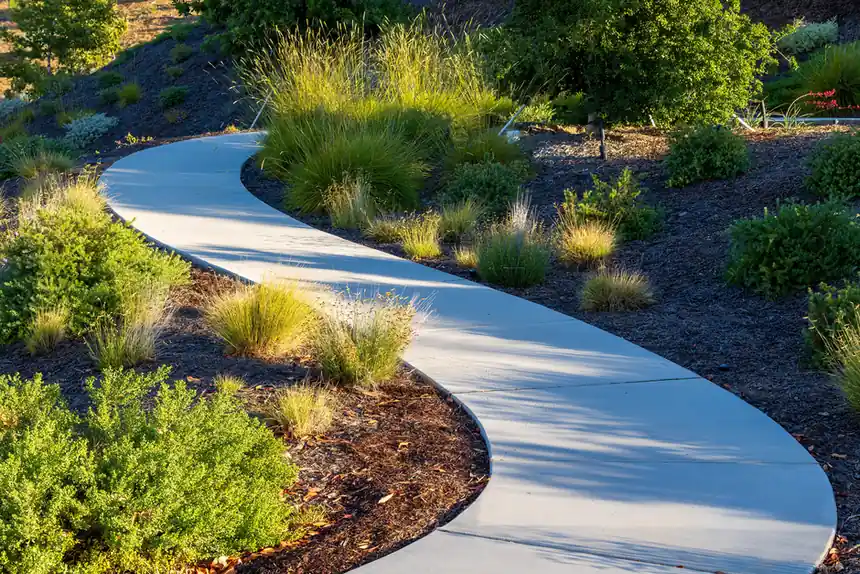
Demo and Haul-Off
We saw-cut and remove the old walk, load it out, and haul it to the yard. That includes protecting your driveway and landscaping during the tear-out. If there is no old walk, this step drops off and the price reflects it.
Every walkway job we pour includes the full scope from demo to cleanup. You are not paying extra for base prep, reinforcement, or joint cutting. Here is what comes standard, and what we quote separately when your job needs it.
We saw-cut and remove the old walk, load it out, and haul it to the yard. That includes protecting your driveway and landscaping during the tear-out. If there is no old walk, this step drops off and the price reflects it.
We excavate 6 to 8 inches, compact the subgrade, and place 4 inches of class II base in two lifts. Forms go up to a laser level and get coated with release agent. This is the step that decides whether your walk stays flat for 30 years.
Reinforcement sits on chairs at mid-slab depth, not on the dirt where it does nothing. We use rebar on walks over 4 feet wide or on any slope, and wire mesh on standard residential runs. It is included, not an upgrade.
We place a 4-inch slab at 3,500 to 4,000 PSI, screed and vibrate it, then float, edge, and broom the surface. Control joints get cut 1 inch deep every 4 to 6 feet, with expansion joints at the driveway and any fixed structure.
We cover and damp-cure the slab for 3 to 7 days, then clean the site and walk the finished path with you. You get a simple care sheet covering when to walk on it, when to load it, and when to seal it.
We come back after the 28-day cure and apply a breathable sealer. That step locks out water, resists staining, and keeps the finish uniform. Re-seal every 3 to 5 years and the walk keeps looking new.
Concrete Walkway & Sidewalk Installation in Clairemont, California is the trade of forming, pouring, and finishing a reinforced concrete path so it drains, bears weight, and stays flat for decades. We start with a compacted base, set forms to a laser level, tie rebar or wire mesh on chairs, then place a 4-inch slab at 3,000 to 4,000 PSI. Control joints get cut every 4 to 6 feet so the concrete cracks where we want it to, not across the middle of your walk.
Most Clairemont calls come from the same two problems: an old walk that heaved after a wet winter, and a yard that never had a path at all. Our marine-layer climate is gentle on concrete compared to the desert, but clay soil and slope still move slabs, and roots from ficus and eucalyptus push panels out of line. If you have been searching concrete path installation near me Clairemont and getting nothing but ads, we give you a straight number and a real schedule.
Five steps, no surprises. You get a written price before we break ground, a clean site every night, and a walk you can use within 48 hours of the pour.
Schedule
Call or book online — a real human picks up and confirms a 2-hour arrival window.
Diagnose
Licensed tech inspects on-site, then walks you through the cause and your options.
Fix
The job is completed to code and done right the first time — no shortcuts, no surprises.
Guarantee
Every job backed by a written workmanship warranty — and we stand behind it.
Laser Level
Sets form height and slab slope to within 1/8 inch across the run. It is how we guarantee water runs away from the house instead of back toward it.
Concrete Mixer and Pump
A mixer handles smaller pours on site; a pump truck reaches tight side yards and back routes where a chute cannot go. Both keep the pour continuous so you do not get a cold joint.
Power Trowel and Hand Float
The trowel brings up a hard, dense surface on larger slabs; hand floats finish edges and tight spots. We use both to get a uniform surface without overworking the cream.
Concrete Saw and Groover
The saw cuts control joints 1 inch deep after the pour sets; the groover forms joints on smaller walks while the concrete is still workable. Both control where the slab cracks.
Screed, Edger, and Vibrator
The screed strikes off the top, the vibrator knocks out air pockets around rebar, and the edger rounds the corners so the slab does not chip at the edge.
Husqvarna and Stihl Saws
Husqvarna saws handle the heavy demo and joint cutting; Stihl saws handle detail cuts and trimming forms. Both run wet to control dust on residential jobs.
ACI flatwork standards
We follow ACI guidance for slab thickness, joint spacing, and finish. That means 4 inches minimum on residential walks, joints every 4 to 6 feet, and a finish timed to the weather so the surface does not dry too fast.
Air-entrained 3,500-4,000 PSI mix
Air entrainment gives the concrete room to expand and contract with our marine layer and the occasional hard freeze. We dose with Sika or Euclid Chemical admixtures when the pour runs hot or the mix needs a water reducer.
Two-lift base compaction
We place class II base in two lifts and compact each one before the next goes down. Single-lift base looks fine on pour day and settles within a year. Two lifts is what keeps the slab flat.
Damp curing for 3 to 7 days
We cover the slab and keep it damp so the concrete cures instead of drying out. Fast drying is the main cause of surface scaling and hairline cracking on new walks.
01
What we do: We demo the affected panels, check the base, and re-pour the run to a laser level with new control joints. If the whole walk is moving, we replace it end to end and correct the grade.
→ A level, trip-free path from the driveway to the porch, with water running away from the house instead of pooling at the base.
02
What we do: We lay out a route that follows the natural walking line, pour a 4-inch reinforced slab, and tie it into the patio edge so the transition is flush. Broom finish for grip when it is wet.
→ A dry, mud-free route to the patio that holds up to daily foot traffic and looks intentional instead of worn in.
03
What we do: We build the retaining wall first, set drainage behind it, then pour the walk along the top. Wall height and path slope are designed together so the walk does not undercut the wall.
→ A usable side path on a slope that used to be too steep to walk, with the grade held in place by a proper wall.
04
What we do: We grind and clean the slab, apply a bonded overlay, and score or stamp it to match the new hardscape. If the slab is sound, this saves the cost of a full tear-out.
→ A uniform, finished walk that matches the new landscaping for a fraction of replacement cost.
Clairemont sits on clay and decomposed granite with real grade changes, and that shapes every walk we pour. Sloped lots in Mount Streets and Genesee Highlands need deeper base and more compaction than a flat lot in Clairemont Village, and canyon-edge properties in Bay Ho need drainage designed before the first form goes down. Our marine layer keeps summers mild, which is good for curing, but it also means the soil stays damp longer and moves more. We plan for that with air-entrained mix, control joints every 4 to 6 feet, and a base that drains. If you have been looking for concrete path installation near me Clairemont and getting nothing but call centers, we are the crew that actually shows up with a laser level and a compaction plate. Typical 2026 pricing in this area runs $12 to $22 per square foot for a residential walk, and we tell you where your job lands before we start.
Mount Streets
Steep lots and terraced yards mean many walks need a low retaining wall and a drainage path. We design the wall and the walk together so the grade holds.
Bay Ho
Canyon-edge properties deal with erosion and slope movement. We set deeper base and route runoff away from the canyon lip to keep the walk stable.
Clairemont Village
Tighter lots and narrow side yards mean more hand work and smaller equipment. We pour with a mixer and wheelbarrow when a truck cannot reach.
North Clairemont
Older homes with mature ficus and eucalyptus root systems. We plan the route around major roots and use root barriers where the walk runs close to a tree.
Clay and decomposed granite soil
These soils expand and contract with moisture, which moves slabs. We compensate with 4 inches of compacted base and joints placed to control where movement shows up.
Coastal marine layer and damp winters
Damp soil stays active longer, so base prep matters more here than in drier inland areas. We compact in two lifts and slope every slab away from the house.
Sloped lots with grade changes
Walks on a slope need steps, retaining, or both. We set elevations so each run drains and the transitions between levels are safe to walk.
Mature tree roots near the path
Roots push panels up and crack slabs. We route around major roots, add root barriers, and use expansion joints where the walk passes close to a tree.
Most walkway calls come down to four issues: movement, water, surface wear, and safety. We diagnose the cause before we quote the fix, because pouring a new slab over a bad base just buys you the same problem in five years.
Problem
Lips of an inch or more become trip hazards, and water pools against the house instead of running off. Ignoring it usually means the movement spreads to the next panel.
Our Fix
We remove the affected panels, re-compact the subgrade, and re-pour to a laser level with proper joints. If the whole walk is moving, we replace the run and correct the base so it stops happening.
Problem
Random cracks let water into the slab, which speeds up spalling and freeze-thaw damage. A crack that starts at the edge usually runs the full width within a year.
Our Fix
We route and fill existing cracks with epoxy or polyurethane, then cut proper control joints on any new pour. Joints every 4 to 6 feet give the slab a place to move without cracking.
Problem
A flaking surface looks worn and gets worse every winter. Once the top layer is gone, the aggregate shows and the walk collects dirt and stains.
Our Fix
We grind the damaged surface and either resurface with a polymer overlay or replace the slab if the damage is deep. A sealer after cure prevents the next round of scaling.
Problem
Water that sits against the walk softens the soil, which causes settling and can push water toward your foundation. It is the most common cause of a walk that keeps moving.
Our Fix
We re-grade the subbase, set the slab slope at 1/4 inch per foot away from the house, and tie the walk into your existing drainage so runoff leaves the area.
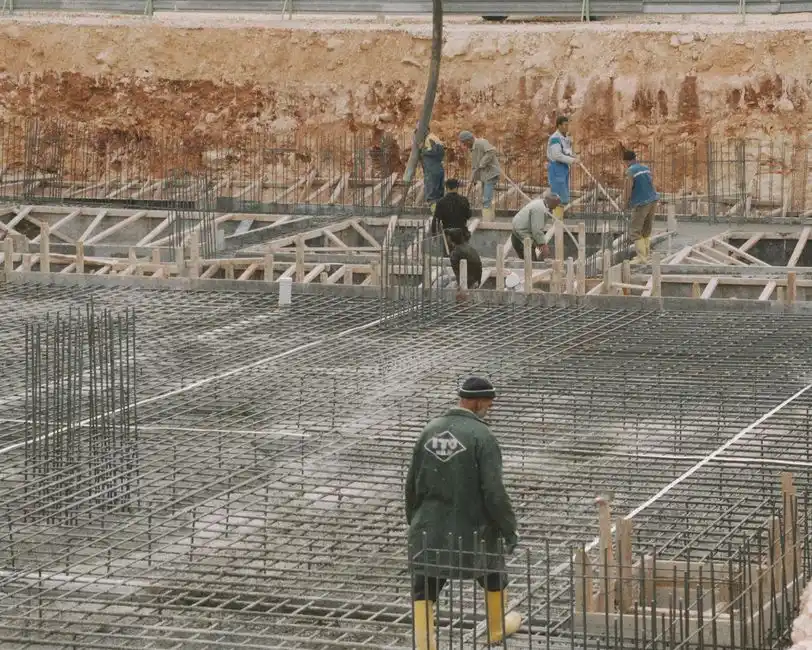
A new walk is one of the few home upgrades that pays you back every single day, in safety, drainage, and curb appeal. Here is what a properly poured path actually delivers.
Level, Trip-Free Surface
Heaved panels and 1-inch lips are the number one cause of falls at home. We set every slab to a laser level with a 1/4-inch-per-foot slope away from the house, so water runs off and your feet never catch an edge. Most residential walks finish within 1/8 inch of flat across a 20-foot run.
Drainage That Works
Standing water at the base of a walk softens soil and speeds settling. We grade the subbase, crown the slab where it helps, and tie into your existing drainage so runoff moves to the street or a dry well. That one detail is why our Clairemont concrete walkway installation jobs hold their line through a wet January.
Curb Appeal That Sells
A clean, straight walk changes how the whole front yard reads from the street. Buyers notice a path that meets the driveway flush and runs true to the porch. We can broom-finish for grip, add a light salt finish, or match an existing slab color so the new work blends with what you already have.
Built for 30+ Years
A 4-inch slab at 3,500 PSI with proper base and joints is a 30-year walk in this climate. We use Quikrete and Sakrete mixes, add a water reducer from Sika when the pour runs hot, and seal the surface after 28 days of cure. That is how you avoid spalling and scaling down the road.
Walkway pricing in Clairemont is straightforward once you know the variables. Most residential jobs run $12 to $22 per square foot in 2026, and a typical 200-square-foot walk lands between $2,400 and $4,400. The low end is a simple broom-finish walk on flat ground with good access. The high end includes demolition, steps, stamped finish, or a haul-off through a tight side yard. We give you a written number the same day we walk the job, and we break out what drives the price so you can see where your money goes.
Typical Investment Range
$2,400 - $4,400 for a typical 200 sq ft residential walk
A properly built walk lasts 30 years or more with basic sealing. Spread over that life, the cost per year is small, and you get a level, safe path every day in between. Cheap work that settles in three years is the expensive option.
What changes the price
Square footage and thickness
Price scales with area, and a 5- or 6-inch slab for heavier use costs more than a standard 4-inch walk. Most residential walks are 4 inches; anything that takes a vehicle load goes thicker.
Demolition and haul-off
Removing an old walk adds labor, disposal fees, and equipment time. A walk that is easy to reach with a skid steer costs less to remove than one behind a gate with no access.
Access and site conditions
Tight side yards, slopes, and long carries from the truck to the pour add labor. If a pump truck is needed, that is a line item. Flat front yards with driveway access are the cheapest to pour.
Finish and reinforcement
Broom finish is standard. Stamped, colored, or salt finishes add material and labor. Rebar costs more than wire mesh but is worth it on slopes and wide walks.
Steps, walls, and drainage
Grade changes need steps or a retaining wall, and both add cost. Drainage work, root barriers, and expansion joints at fixed structures are quoted based on what the site needs.
Sealer and cure time
Sealing after the 28-day cure is a small add-on that protects the finish and extends the life of the walk. We include it in most quotes because it pays for itself.
Google ★★★★★4.9
Poured a 200-square-foot walk from our driveway to the front door in three days. Base prep was thorough, joints are clean, and the slope away from the house is right. They cleaned up every night and the price matched the quote exactly.
Yelp ★★★★★4.8
We had a sloped side yard that was unusable. They built a small retaining wall and poured a walk with two steps. Five days start to finish, and it has held through two winters without a crack. Honest crew, fair price.
BBB ★★★★★5.0
Got three bids for a new walkway. These guys were the only ones who explained base depth and drainage instead of just quoting square footage. The finished walk looks like it has always been there. Would hire again.
Google ★★★★★4.9
Our old walk had spalled badly. Instead of pushing a full replacement, they ground it and applied an overlay that matched our patio. Saved us thousands and it looks great. They came back after 30 days to check the sealer.
We have been pouring concrete in Clairemont since 2017, and walkways are a big part of what we do. Our crews hold ACI certification for flatwork finishing, and every lead carries an OSHA 30 card and works under a California Contractor License (C-8). We have poured walks on the slopes above Mount Streets, in the tight side yards of Clairemont Village, and along the canyon edges in Bay Ho. That range teaches you how to read soil, slope, and drainage before the first form goes down.
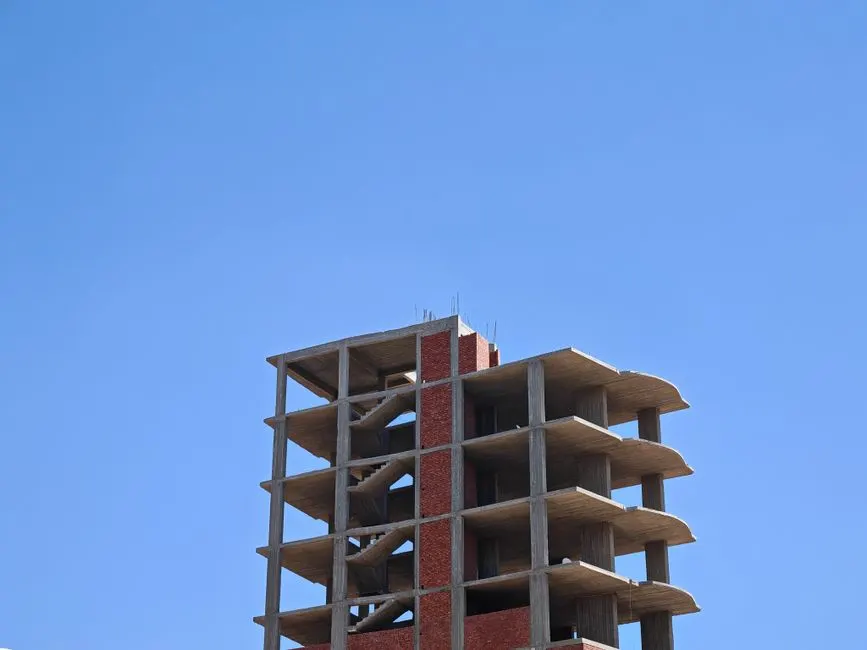
Real experiences from customers who chose our Concrete Walkway & Sidewalk Installation services.
“Our old walk had three heaved panels and my mother tripped on one in March. They tore it out, fixed the base, and poured a new path in three days. The slope away from the house is right, the joints are clean, and it has not moved through two wet winters. Fair price and they cleaned up every night.”
Marisol R.
Homeowner, Clairemont Mesa
“I had three bids for a new walk from the driveway to the front door. These guys were not the cheapest, but they were the only ones who talked about base depth and drainage instead of just square footage. Poured 220 square feet, broom finish, and it looks like it has always been there. Neighbors have already asked for their number.”
Dave K.
Homeowner, North Clairemont
“We needed a path along a slope with a small retaining wall. They built the wall and poured the walk in one project, set the elevations so water runs to the street, and finished it in five days. The stamped border matches our patio. Zero cracks after a full year, and they came back to check the sealer.”
Priya S.
Homeowner, Bay Park
Real answers to the questions we hear most often from local homeowners and property managers.
Most walkway jobs tie into a driveway apron, and we pour both so the joint lines match. A new driveway in Clairemont gets the same base prep and reinforcement we use on walks, which keeps the two slabs moving together instead of cracking apart at the seam.
View Concrete Driveway InstallationIf your driveway has a cracked or settled panel where the walk meets it, we can replace that section instead of the whole slab. Mudjacking or a partial pour often solves the trip hazard at the apron for a fraction of a full replacement.
View Concrete Driveway RepairA walk that ends at a new patio makes the whole backyard usable. We pour patios at the same thickness and finish as your walk so the transition is flush, and we can broom, salt, or stamp the patio to match the path.
View Concrete Patio InstallationSpalled or cracked patio slabs next to a new walk look worse by comparison. We repair the damaged area, match the finish, and re-seal so the patio and walk read as one continuous pour.
View Concrete Patio RepairNot every walk needs a full replacement. Heaved panels, spalling, and hairline cracks can often be repaired or resurfaced. We tell you honestly when a repair will hold and when a new pour is the better money.
View Concrete Walkway & Sidewalk RepairStamped finishes give a walk the look of stone, brick, or slate without the upkeep. We stamp walkways in Clairemont with a release agent and a sealer topcoat, and we keep the pattern running true around curves and steps.
View Stamped ConcreteCall us at +18446359999 or email info@concretecontractorclairemont.com to schedule an estimate. We answer the phone Monday through Friday from 8:00 AM to 6:00 PM and return after-hours messages the next morning. Most estimates in Clairemont are scheduled within a day or two, and we give you a firm price before any work begins.
Phone
+18446359999Address
Genesee Ave, San Diego, CA 92117, Clairemont, California
Hours
Mon–Fri: 7AM – 7PM
Sat: 8AM – 4PM
Sun: Emergency Only
24/7 Emergency Available